The post AHS LIVE: The Living Plant Museum appeared first on American Horticultural Society.
]]>
with Paige Tailyn Johnson, plant educator, Blossom Effect
Thursday, November 5, 2026 from 2-3 p.m. ET
Virtual
$15 AHS members/$20 non-members
This program is approved for 1 CEU with the Association of Professional Landscape Designers
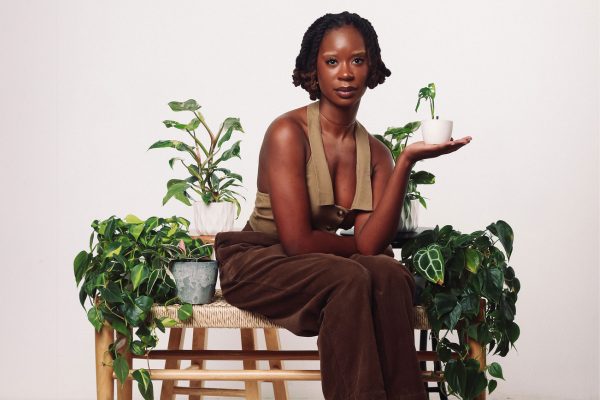
Every plant is a living artifact, carrying centuries of history, culture, and science in its leaves. Join Paige Tailyn Johnson, plant educator from the Blossom Effect, a platform empowering black and brown people to nurture plants and personal growth, for a session full of historical tidbits. Together, you’ll learn the historical roots behind each plant and better understand how to nurture living things, and along with them, your own personal growth.
Paige Tailyn is an Atlanta-based plant educator, enthusiast, and founder of Blossom Effect, a platform she created in honor of her grandmother to uplift Black and brown communities through accessible houseplant education. Through Blossom Effect, she launched the Blossom Effect Business Fund (Micro Grant Program) and the LGBTQ+ & BIPOC Plant Directory, initiatives supporting and spotlighting underrepresented plant entrepreneurs. Her work centers on cultural connection, growth, and community care, nurturing people as intentionally as she nurtures plants.
Since starting Blossom Effect and focusing on her social media in 2023, Paige has garnered 3+ million followers across TikTok and Instagram. Her work has been featured in publications that include Ebony, Rolling Out, and House Beautiful, and teamed up with Urban Outfitters and Pinterest to curate a safe space with plants. Through her talent agency, Kensington Grey, she has collaborated with brands such as Dr. Bronner’s, Home Depot, and Subaru.
The post AHS LIVE: The Living Plant Museum appeared first on American Horticultural Society.
]]>The post AHS LIVE: Thomas Jefferson’s Gardening Legacy appeared first on American Horticultural Society.
]]>
with Peggy Cornett, curator of plants, Monticello
Thursday, October 29, 2026 from 2-3 p.m. ET
Virtual
$15 AHS members/$20 non-members
This program is approved for 1 CEU with the Association of Professional Landscape Designers
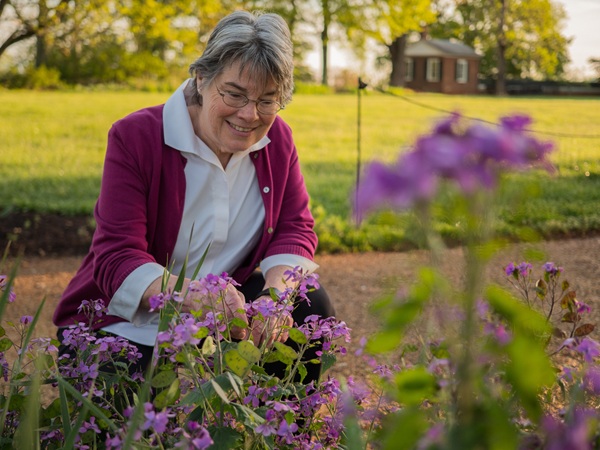
Step into the often-complex history of Thomas Jefferson’s landscapes and gardens at Monticello. The heirlooms of the garden, like priceless antiques, can tell us important and fascinating stories about our past. Unlike fragile relics kept in museums, living antiques depend upon us for survival and are best preserved and enjoyed by growing them. Peggy Cornett, Monticello’s Curator of Plants, will discuss Jefferson’s lifelong passion for the natural world, landscape design, and horticulture and the many plant varieties—from historic tulips and ancient roses to heirloom fruits and vegetables—that have been collected, propagated, and preserved through the Center for Historic Plants for over forty years.
Peggy Cornett, curator of plants, has worked at Thomas Jefferson’s Monticello since 1983, beginning as the associate director of gardens and grounds. She earned degrees in English and Botany from UNC-Chapel Hill and a master’s from the University of Delaware’s Longwood Graduate Program. Prior to Monticello, Peggy worked in the restored gardens at Old Salem Museum and Gardens (Winston-Salem, North Carolina) and Oak Alley Plantation in Louisiana. She served as director of the Thomas Jefferson Center for Historic Plants for seventeen years. Peggy often lectures on garden history topics, writes articles for gardening magazines, professional journals and books, and gives radio and television interviews including PBS programs. Peggy serves on the garden advisory panel for Thomas Jefferson’s Poplar Forest and edits Magnolia, the publication of the Southern Garden History Society (SGHS). In 2008, she received the SGHS “Flora Ann Bynum Medal” for exemplary service in the garden history field. In 2016 she received the Garden Club of America’s Zone VII Horticultural Commendation for her horticultural expertise, generosity in sharing knowledge, and dedication to preserving Thomas Jefferson’s botanical legacy. More recently Peggy received Honorary Memberships in the Garden Club of Virginia and the Garden Club of America. Peggy’s book, Thomas Jefferson’s Flowers, Historic Gardens at Monticello, was published by the University of Virginia Press and released May 2026.
The post AHS LIVE: Thomas Jefferson’s Gardening Legacy appeared first on American Horticultural Society.
]]>The post AHS LIVE: Nuwu Pahsats: The People’s Garden appeared first on American Horticultural Society.
]]>
with Ian Ford-Terry, archaeologist and tribal liaison, Springs Preserve
Thursday, October 1, 2026 from 2-3 p.m. ET
Virtual
$15 AHS members/$20 non-members
This program is approved for 1 CEU with the Association of Professional Landscape Designers
Every aspect of a garden – every root, soil microbe, flower, pollinator, and season – is bound up in a web of relationships that by itself cannot survive. Nuwu Pahsats, “The People’s Garden” at Springs Preserve in Las Vegas, is built on that same principle: mutually flourishing relationships between plants and pollinators, between people and the living earth, between speakers of an endangered indigenous language and their interpreters, and between a coalition of tribal communities, NGOs, government agencies, Master Gardeners and nurseries learning to grow native plants together. In this talk, Ian Ford-Terry tells the story of how patient, genuine collaboration with the Las Vegas Paiute Language Group turned a well-intentioned “ethnobotanical garden” concept into a revitalized cultural landmark, traditional ecological knowledge and language repository, and culturally responsive seed bank and nursery — and what that slow, intentional work of relationship-building can teach any gardener cultivating community alongside their plants.
Ian Ford-Terry serves as the Archaeologist & Tribal Liaison for the Springs Preserve, where he applies his interdisciplinary expertise in horticulture, ethnobotany, and archaeology. His work focuses on leveraging Traditional Ecological Knowledge (TEK) to inform modern land and plant conservation practices, particularly in arid ecosystems like Southern Nevada. At Springs Preserve, Ford-Terry evaluated and determined the plant selections for Nuwu Pahsats Garden, the Ethnobotanical Garden of the Nuwuvi, by consulting with the Southern Paiute people and integrating ethnographic and archaeobotanical data. He also established the Nuwu Pahsats Speaker Series, featuring Indigenous Knowledge Keepers discussing heirloom seeds, food sovereignty, and traditional farming practices.
Further encouraging collaboration in horticulture, Ford-Terry also founded and leads a broad-based Native Plant Propagation Coalition, consisting of Bureau of Land Management botanists, National Park Service nursery managers, Southern Nevada Water Authority restoration ecologists, University of Nevada Reno Extension Master Gardeners, THPOs, and local nursery managers. The Coalition focuses on sharing propagation protocols and plant material. Ford-Terry also directs the collection, cleaning, cataloging, and distribution of native and heirloom seeds. Ford-Terry’s community engagement includes securing funding from NFL Green to develop landscape and install irrigation at the Las Vegas Indian Center Healing Garden, where he co-designed a permaculture plan. Additionally, while working in a previous position at University of Nevada Reno Extension, he led an effort to train staff and Master Gardener volunteers on accessibility standards and ADA compliance. Ford-Terry holds an M.A. in Anthropology (Archaeology/Paleoethnobotany) from University of Nevada Las Vegas, with a focus on Agave-Human Symbiosis. He is the recipient of the American Horticultural Society’s 2026 Horticultural Innovation Award.
The post AHS LIVE: Nuwu Pahsats: The People’s Garden appeared first on American Horticultural Society.
]]>The post AHS LIVE: Mastering the Art of Vegetable Gardening appeared first on American Horticultural Society.
]]>
with Matt Mattus, senior director of horticulture, AHS
Friday, November 20, 2026 from 2-3 p.m. ET
Virtual
$15 AHS members/$20 non-members
This program is approved for 1 CEU with the Association of Professional Landscape Designers
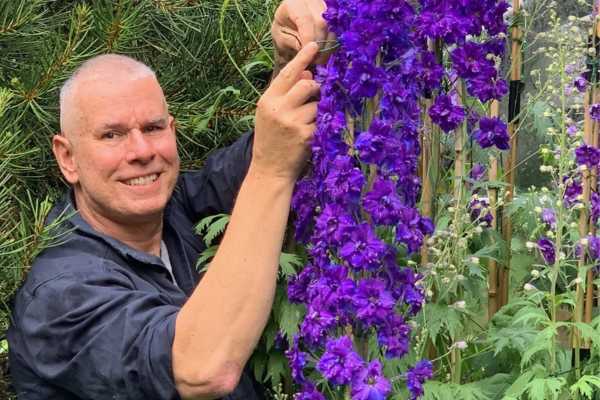
To mark the season of harvest and abundance, AHS senior director of horticulture Matt Mattus shares his expertise on cultivating produce. Based on his acclaimed book of the same name, Mastering the Art of Vegetable Gardening will expand your knowledge base and introduce options that go beyond the ordinary. Prepare to encounter new varieties of common plant species, learn their history and benefits, and identify fascinating new edibles to grow in your own gardens. This talk will feature highlights from more than 200 vegetable variety profiles that tell you how, where, and why to grow each plant. It is a perfect opportunity to prepare for your winter seed selection!
Matt Mattus is the Senior Director of Horticulture at the American Horticultural Society and a leading voice in the world of gardening. He previously served as Vice President of the New England Botanic Garden at Tower Hill and as President of the North American Rock Garden Society. A widely published author and contributor, his writing appears in top gardening magazines, and he is the author of two acclaimed books: Mastering the Art of Flower Gardening and Mastering the Art of Vegetable Gardening.
The post AHS LIVE: Mastering the Art of Vegetable Gardening appeared first on American Horticultural Society.
]]>The post AHS LIVE: Ecologies of Memory: Landscapes as Story Networks appeared first on American Horticultural Society.
]]>
with Sara Zewde, founding principal, Studio Zewde
Friday, October 23, 2026 from 11 a.m.-12 p.m. ET
Virtual
$15 AHS members/$20 non-members
This program is approved for 1 CEU with the Association of Professional Landscape Designers
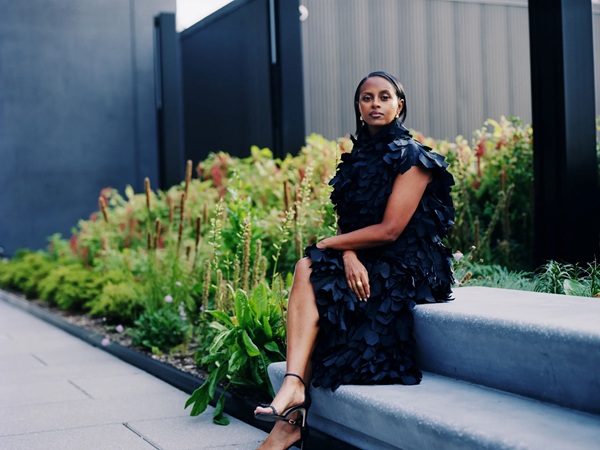
In the context of a changing climate, clarified social and political tensions, and rapid urban development, an understanding of ecologies of memory can offer creative departures for contemporary design practice. The Ecologies of Memory framework explores stakeholders’ individual and collective stories of place to inform dynamic landscape design. Sara Zewde will share recent design work of Studio Zewde across a range of United States geographies using this framework.
Sara Zewde is founding principal of Studio Zewde, a design firm practicing landscape architecture, urbanism, and public art. Named to TIME Magazine’s TIME100 Next, Architectural Digest’s AD100, and a United States Artists Fellow, her work is celebrated for design methods that sync culture, ecology, and craft. In parallel with practice, Sara serves as Associate Professor of Practice at the Harvard University Graduate School of Design. She holds a Master of Landscape Architecture from Harvard GSD, a Master of City Planning from MIT, and a BA in Sociology and Statistics from Boston University. She is also currently writing a book on Frederick Law Olmsted’s travels through the Slave South, to be published by Simon & Schuster in 2027.
The post AHS LIVE: Ecologies of Memory: Landscapes as Story Networks appeared first on American Horticultural Society.
]]>The post AHS LIVE: Horticulture and History in the Public Realm appeared first on American Horticultural Society.
]]>
with Eric Groft, CEO and director and Lili Herrera, principal, OEHME, VAN SWEDEN
Thursday, October 15, 2026 from 2-3 p.m. ET
Virtual
$15 AHS members/$20 non-members
This program is approved for 1 CEU with the Association of Professional Landscape Designers
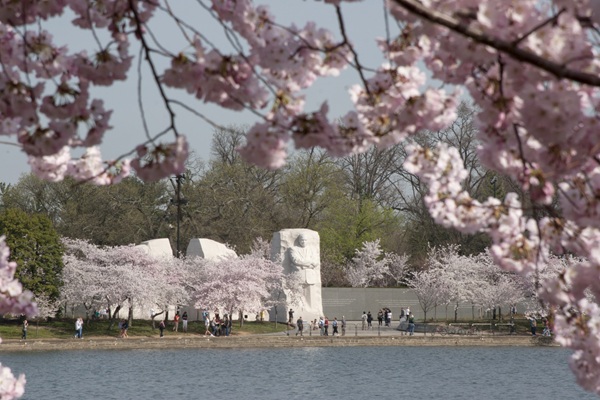
Join Eric Groft and Lili Herrera as they discuss some of their firm’s most notable public landscapes, including The Martin Luther King, Jr. National Memorial, The National World War II Memorial, The Virginia Avenue Gardens of the Federal Reserve, The Pennsylvania Avenue Development Corporation, and the White House Rose Garden in Washington, DC. Together, Eric and Lili will show how OEHME, VAN SWEDEN applies the New American Garden style to public, civic, and memorial landscapes internationally. Acknowledging the inevitable changes that time brings—trees grow, climates change, and scientific understanding evolves—they will discuss how enduring relationships with clients and collaborators have allowed OvS to steward public landscapes towards resilience through time and transition.
Based in Washington, DC since 1977, OEHME, VAN SWEDEN | OvS is a diverse group of landscape architects, horticulturalists, designers, creative thinkers, and collaborators. OvS’ pioneering design solutions balance bold horticultural diversity and architectural artistry. The firm explores ecology, culture, and history in every project to distill the land’s form and function. The result is a contextually appropriate, high-performance composition that connects people to place. The firm’s portfolio of work ranges from expansive civic spaces and commercial redevelopments to botanic gardens and sculpture parks to urban residences and estates.
The post AHS LIVE: Horticulture and History in the Public Realm appeared first on American Horticultural Society.
]]>The post AHS LIVE: Native Sedges and Grasses appeared first on American Horticultural Society.
]]>
with Shannon Currey, horticultural educator, Izel Native Plants
Thursday, November 12, 2026 from 2-3 p.m. ET
Virtual
$15 AHS members/$20 non-members
This program is approved for 1 CEU with the Association of Professional Landscape Designers
Looking for strategies to garden smarter and boost your landscape’s ecological impact? Join us to explore how native grasses and sedges do heavy lifting in the garden—far beyond what conventional turfgrasses can offer. Prized as ecological workhorses, these extraordinary plants build and preserve soil, suppress weeds, reduce inputs, and support biodiversity. But their value doesn’t end when the growing season winds down. Native grasses and sedges add beauty and function across the year. In this webinar, we’ll examine what makes grasses special and explore how to put them to work on your site. From sun to shade, short groundcovers to tall accents, learn how native grasses and sedges can increase resilience and provide year-round performance in any landscape.
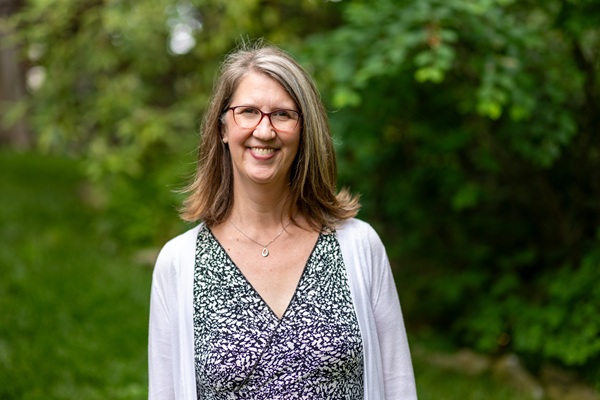
Shannon Currey is a horticultural educator with Izel Native Plants. She has worked in the nursery trade since 2006, developing expertise in grasses and sedges and expanding her knowledge into native perennials. Currey has written for national publications and traveled the country speaking to professional organizations, community groups, and at public gardens. She currently serves on the North Carolina Plant Conservation Program Scientific Committee, holds advisory roles with several organizations, and served on the Board of the Perennial Plant Association. Currey lives in Durham, North Carolina and loves exploring gardens and native flora everywhere she goes.
The post AHS LIVE: Native Sedges and Grasses appeared first on American Horticultural Society.
]]>The post AHS LIVE: Tree Conservation in the Americas appeared first on American Horticultural Society.
]]>
with Dr. Silvia Alvarez-Clare, director of the Global Tree Conservation Program, The Morton Arboretum
Thursday, October 8, 2026 from 2-3 p.m. ET
Virtual
$15 AHS members/$20 non-members
This program is approved for 1 CEU with the Association of Professional Landscape Designers
Join Dr. Silvia Alvarez-Clare, the American Horticultural Society’s 2026 Scientific Award recipient, to learn about tree conservation efforts throughout the Americas. From the Global Tree Conservation Program and the Center for Species Survival, to the Global Trees Specialist Group and the Global Conservation Consortium for Oak, Dr. Alvarez-Clare will share the research and projects saving tree species from extinction.
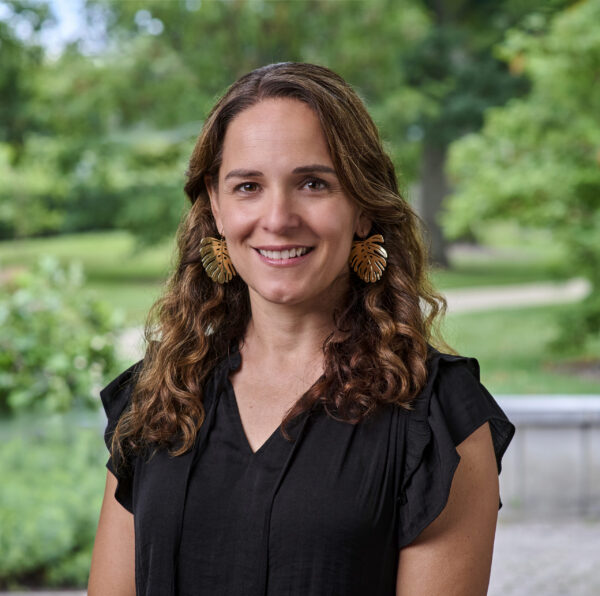
As director of the Global Tree Conservation Program at The Morton Arboretum, Dr. Silvia Alvarez-Clare safeguards threatened tree species through science-based conservation work with stakeholders around the world. Her research uses long-term monitoring, experimentation, and ecological techniques to understand how changes in climate, land use, and soil nutrients impact plant communities, particularly trees. She translates her research into better policies, improved management practices, and restoration actions that aid in saving tree species from extinction.
Dr. Alvarez-Clare spearheaded the creation of the Center for Species Survival: Trees, which was established at The Morton Arboretum through a strategic partnership with the International Union for Conservation of Nature’s Species Survival Commission to serve as a catalyst for tree conservation and accelerate the actions needed to reverse species loss. Her scientific research with the Morton Arboretum provides models for tree health and ecosystem health throughout the world, including shaping plant collections and horticultural approaches and environments.
She has influenced horticulture in the United States through collaborations such as the US Forest Service’s Forest Health Protection Program, researching the value of tree genetic diversity in urban areas. As a National Geographic Explorer, she also galvanizes support internationally to conduct scientific research on endangered oak flagship species and to plant thousands of trees in Mesoamerica with local communities.
She is a member of the advisory board for the Global Trees Specialist Group, a network of more than 300 experts that is part of the Species Survival Commission of the IUCN. Dr. Alvarez-Clare also leads the Global Conservation Consortium for Oak, a network established by Botanic Gardens Conservation International (BGCI) to ensure that no species of oak goes extinct. She is also a mentor for the National Science Foundation-funded project Rare Plant Network (Rare RaMP), which focuses on training and mentoring post-graduates in plant research and conservation.
The post AHS LIVE: Tree Conservation in the Americas appeared first on American Horticultural Society.
]]>The post AHS LIVE: Designing the Lush Dry Garden appeared first on American Horticultural Society.
]]>
with Cricket Riley, author and principal, Lush Dry Gardens
Wednesday, September 23, 2026 from 7-8 p.m. ET
Virtual
$15 AHS members/$20 non-members
This program is approved for 1 CEU with the Association of Professional Landscape Designers
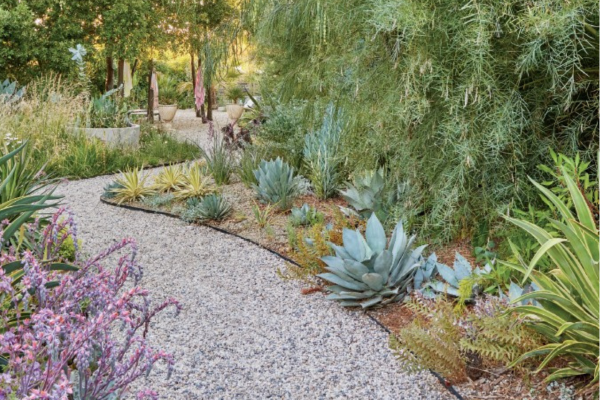
The drought-tolerant garden has an image problem — for too many professionals and home gardeners alike, “water-wise” still conjures the sparse, cactus-and-gravel landscapes of 1980s suburban design. In this webinar, Bay Area landscape designer Cricket Riley makes the case that it’s time to retire that vision entirely. Drawing on her book, Designing with Lush Dry Gardens, Cricket explores how to create gardens that are ecologically responsible and visually abundant — layered with texture, rich in seasonal color, and alive with habitat value — offering both the design principles and climate-appropriate plant palettes to guide clients toward dry gardens that feel generous and alive, not like a concession to climate.
Cricket Riley is a landscape designer specializing in lush, low-water gardens. During her tenure at the Ruth Bancroft Garden, she held a variety of roles, most recently serving as Design Services Director. She also co-created the Garden’s Dry Garden Design Certificate Program with Alice Kitajima and served as its primary instructor. Building on that experience, she co-founded the firm Lush Dry Gardens, where she serves as Principal Designer and works with a team of landscape designers to help homeowners create beautiful, climate-appropriate landscapes. Cricket holds an A.A. in Landscape Architecture from Merritt College, a B.A. in History from the University of California, Santa Cruz, and an M.A. in Near Eastern Studies and Broadcast Journalism from New York University.
The post AHS LIVE: Designing the Lush Dry Garden appeared first on American Horticultural Society.
]]>The post AHS LIVE Behind-the-Scenes Garden Tour: Bloedel Reserve appeared first on American Horticultural Society.
]]>
with Kaslin Daniels, director of horticulture & design, Bloedel Reserve and Camille Paulsen, AHS board member
Friday, October 9, 2026 from 10:30 a.m.-12 p.m. PT
Bainbridge Island, WA
$40 AHS members/$50 non-members
Approved for .75 CEU with the Association of Professional Landscape Designers
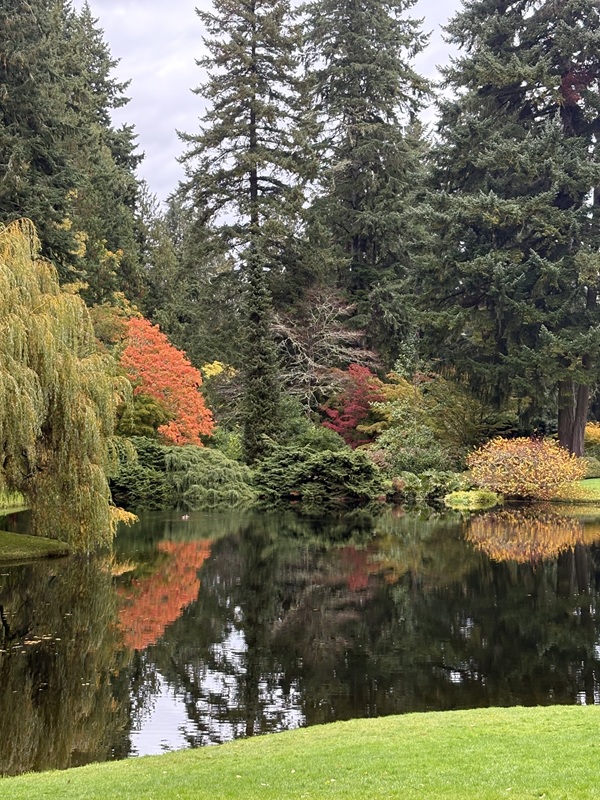
Bloedel Reserve is a 140-acre wonder of nature, created by the imagination, vision, and passionate love of the natural world shared by our founders, Prentice and Virginia Bloedel. Working with the rugged geography of the land, they artfully transformed a rough-hewn Northwest forest into a harmonious series of curated gardens, structural features, and distinctive landscapes, with nature as canvas and paint. This private tour with the garden’s director will highlight brilliant fall colors throughout the grounds, the annual autumn-themed squash display, the moss garden, and the fall-blooming mums, asters, and ornamental grasses.
Kaslin Daniels works alongside the Horticulture & Design team to help guide the overall vision for the gardens at Bloedel Reserve. Her role brings together planning, daily operations, partnerships, and the visitor experience in close collaboration with the team. Her background includes work at gardens and parks around the world, including Central Park, the New York City Parks Department, Longwood Gardens, and Gardens by the Bay in Singapore. These experiences shaped her passion for ecological, community-focused horticulture and her interest in landscapes that support both people and the environment.
The post AHS LIVE Behind-the-Scenes Garden Tour: Bloedel Reserve appeared first on American Horticultural Society.
]]>